Showing posts with label safety. Show all posts

Wednesday, March 30, 2016

Shackles for rigging

There are many jobs a rigger performs that require the use of shackles, that you may not be aware of, so lets look at the types of shackles used.
Shackles are used to connect wires, chains and link to other devices, allowing lifting and moving with ease.
There are two types of shackles that can be used that are either closed with a screw pin or a safety pin.
Shackles come in a range of colours to be easily identified to the type of task being performed. These colours of the shackles are bright and stand out. The main colours are Blue, Green and Silver.
What are the various types of shackles available?
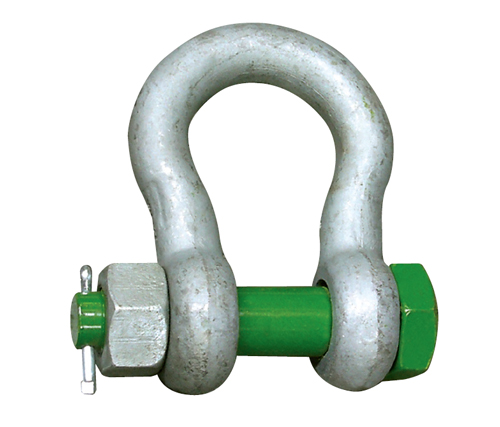
Blue in colour :


  • Bow shackles safety pin
  • Bow shackles screw pin
  • Dee shackles safety pin
  • Dee shackles screw pin

Silver colour:


  • Dee shackle

Green in colour:


  • Bow shackle safety pin
  • Bow shackles screw pin
  • Dee shackle safety pin
  • Dee shackle screw pin
  • Heavy Duty Bow
  • Sling
  • Super
  • Wide mouth


What areas can you see a shackle being used?


  1. Safety Harness – a safety harness warn by a rigger has many dee or bow shackles connected to a belt, so as the rigger can be connected to an object, or attached to a crane for safety from falling.
  2. Cranes – a shackle can be a permanent fixture to the end of the crane or simply attached to move objects securely and safely
  3. Pulley System – you will find a shackle attaching a rope or sling to an object to allow the ease of lifting it as it may be too heavy for manual movement.

Tuesday, November 26, 2013

How to Be Safe with Spreader Beams

In major ports, just as at huge constructions sites, cranes have to lift massive amounts of weight on a daily basis.  This might include everything reinforced concrete for a parking garage or a shipping container full of new stereos from Japan.  When the loads are moved around, the procedure has to be precise for everyone’s safety and for the effectiveness of the job itself.  That’s why there are devices like spreader beams, also known as yokes.

These yokes are bars of metal that have a series of cables or ropes extended from a horizontal shaft below the boom of a crane.  The various ropes and cables balance the load of a heavy object, so it won’t swing, and so the contents shipping container won’t shift or get damaged as they are moved.   Other key tools like good hooks and slings are necessary.  Container spreader beams fit shipping containers that are 20 feet long or 40 feet long, the two standard lengths.  There are various models, ranging from a working load limit, or WLL, of 5 tons, up to one that is suitable for lifting 42 tons.  That’s a lot of stereos.

Because spreader beams deal with great deal of weight, safety is one of the prime concerns of the crane operator.  For example, they need to make sure a shipping container is intact and its load is balanced, then ensure the doors are closed.  They will also take care to use their slings and hooks appropriately.  Being methodical with this equipment is the only way to operate.

Tuesday, February 12, 2013

Safety is the key when operating lifting slings


The most important factor a person should consider while purchasing, operating or maintain a lifting sling is safety. One must regularly examine and inspect chains and lifting slings in order to watch for signs of wear and tear that could be fatal.
While choosing a lifting strap or slings, a person must make sure to check all the safety guidelines associated with the sling. This will increase the protection level that is being provided to the workers associated with the process. On the other hand, while operating lifting slings construction workers should focus on all their equipments.  Attention paid to safety while operation can bring down the number of accidents to a great level.
A lifting sling is used for a particular purpose and load. Always choose a sling that suits all the requirements. On the other hand, the load prescribed by the supplier should not be exceeded in any condition. Exceeding the weight limit of a sling can severely compromise the safety of the job site.
The workers operating the lifting sling should be trained in the task. A lay man handling a lifting sling with a huge load can be a danger to the lives of the people present at the work site.